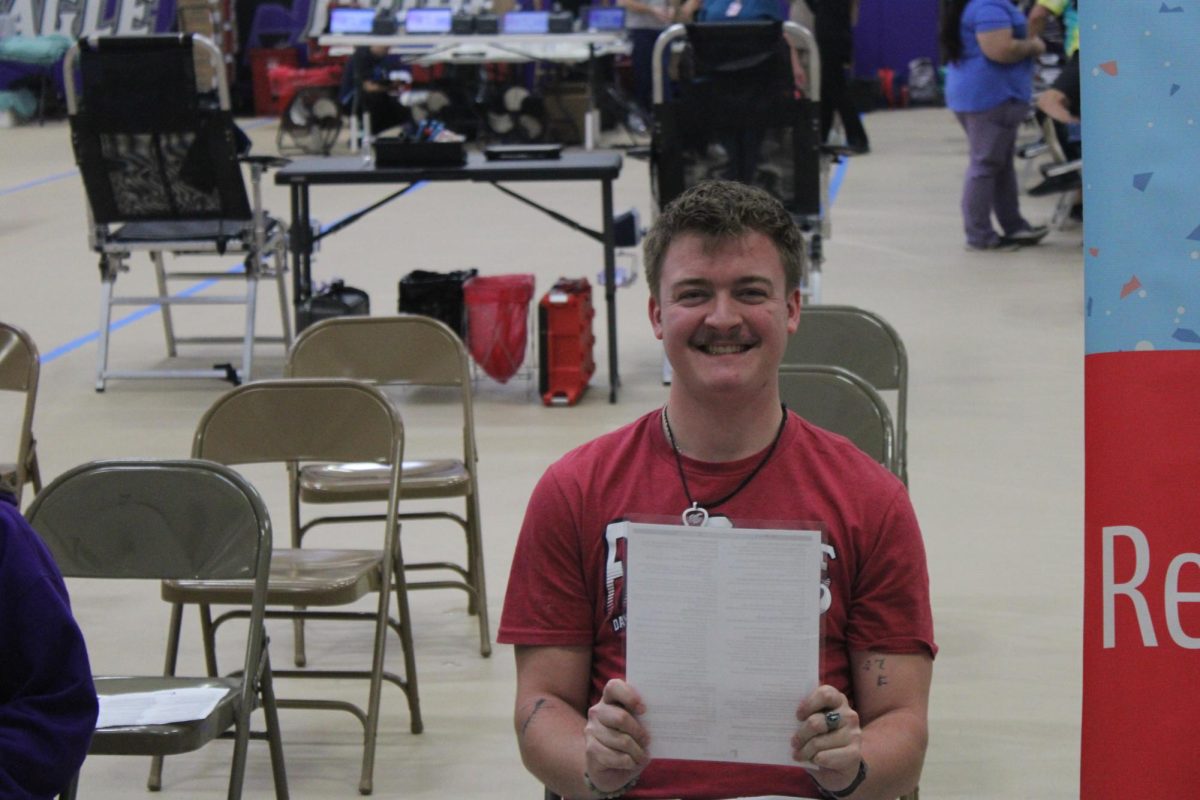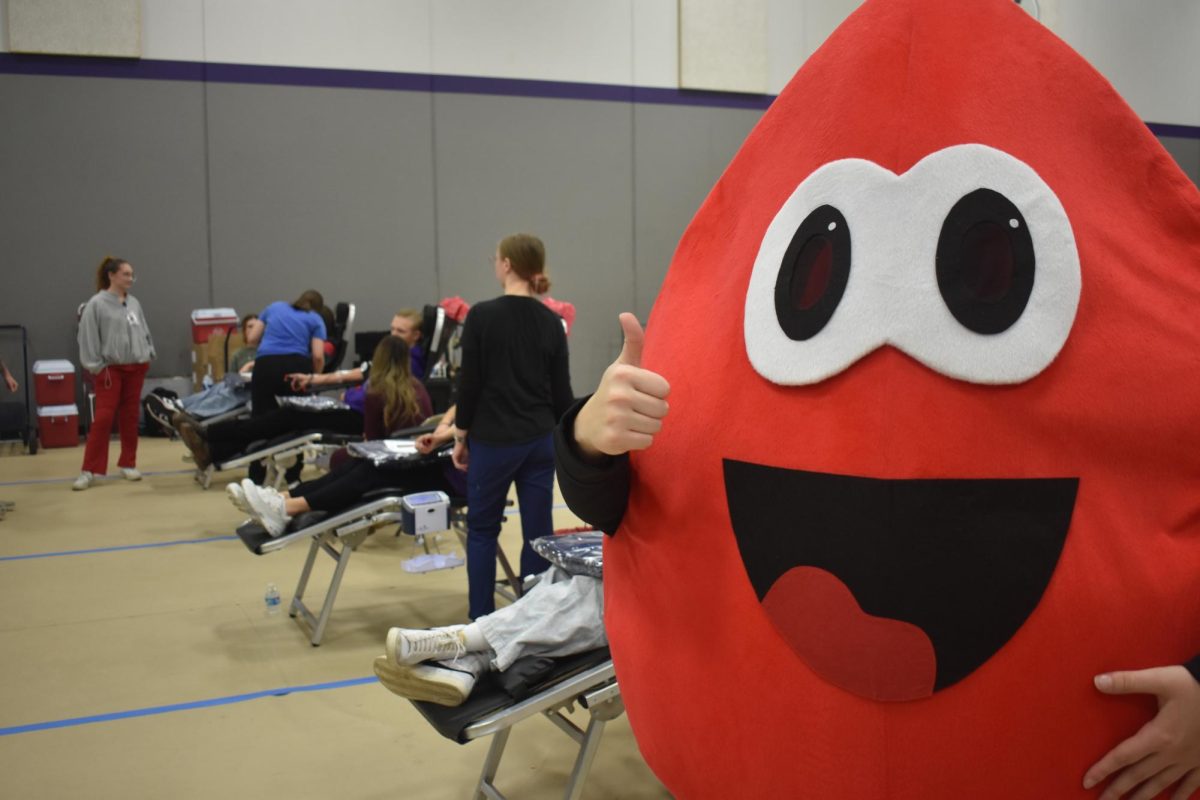
Many students rolled up their sleeves on December 12th for the annual blood drive at Fair Grove High School. The National Honor Society (NHS) was given the opportunity to help with the blood drive by providing blood donations to local hospitals.
According to NHS sponsor and high school history teacher, Amy Johnson, the purpose of the blood drive is to help maintain the local blood supplies. She stated, “The Blood Drive is to help the local hospitals maintain their blood supplies. The Community Blood Center of the Ozarks (CBCO) collects locally and supports local needs.”
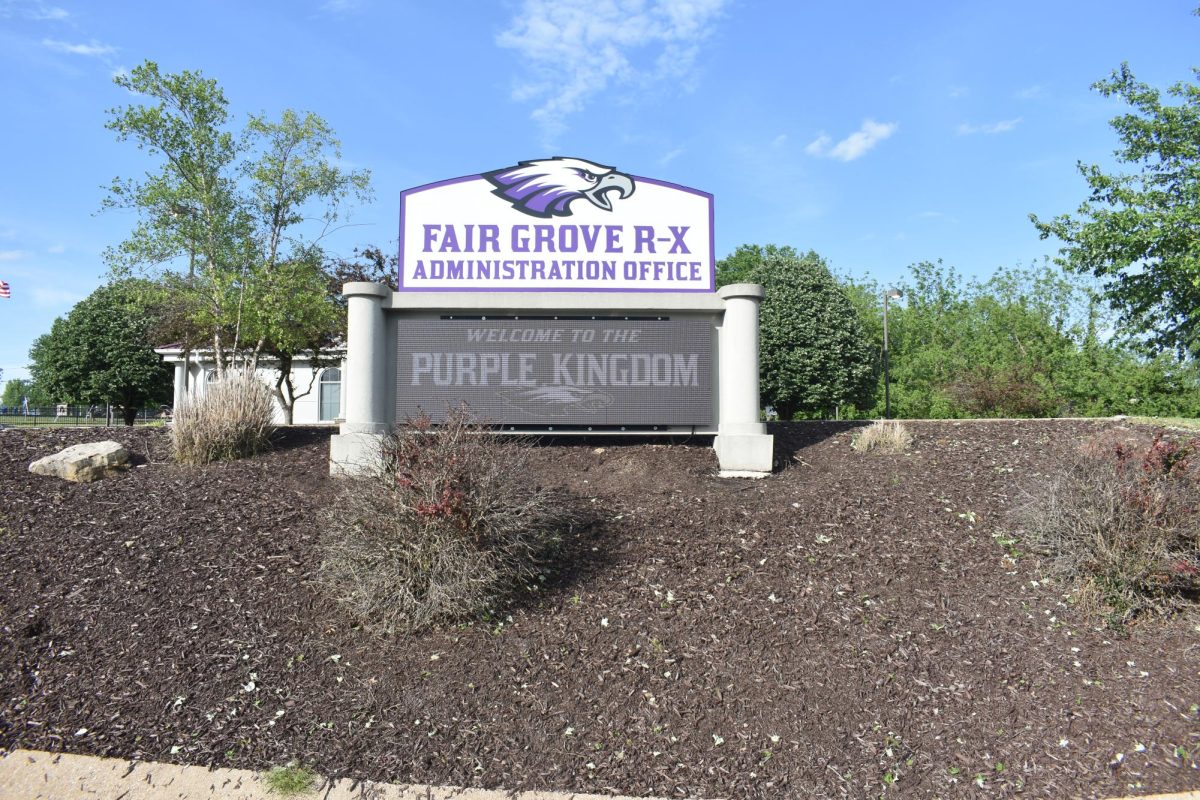
Preparation for the blood drive begins weeks in advance. NHS members have been working to encourage participation from both students and the community. To promote the event, they have posted on social media, put up signs in the school hallways, displayed info on the Administration Building signs, and members went to classrooms to encourage students to get involved. Johnson mentioned that the NHS created a video to excite people about the blood drive.
The blood drive requires help from both NHS officers and the other members. Johnson said, “NHS officers will be working all day, other members will trade off a few hours at a time.” Johnson added, “Volunteers help get students from class and escort them to the blood drive. They sit with donors and monitor the people who have donated.”
Leila Huff (12), a member of NHS, said, “My role in the blood drive was to sit with donors to give them someone to talk to and distract them from the process that can be nerve-racking for some people.” She added, “I love meeting new people and getting to know them, so I really enjoy volunteering.”
Donating blood is very rewarding. Huff stated, “The most rewarding part of the blood drive is seeing a huge amount of people willing to give to someone else.”
Senior Kenna Fishback also volunteered during the blood drive. Fishback stated, “My role in the blood drive was to help volunteer for NHS in the morning by sitting with the people who were giving blood and helping them afterwards.”
Fishback added, “The most rewarding part of working the blood drive is getting to know the people that are giving and meeting many new people that I go to school with that I would never usually get to talk to.”
Johnson said that donors need to prepare themselves days in advance. She suggested that donors drink plenty of water, eat breakfast, and avoid energy drinks in the days leading up to their donation. This year, the NHS had a goal of 75 donations and has put in the effort to reach that number.